
Last updated November 14, 2026
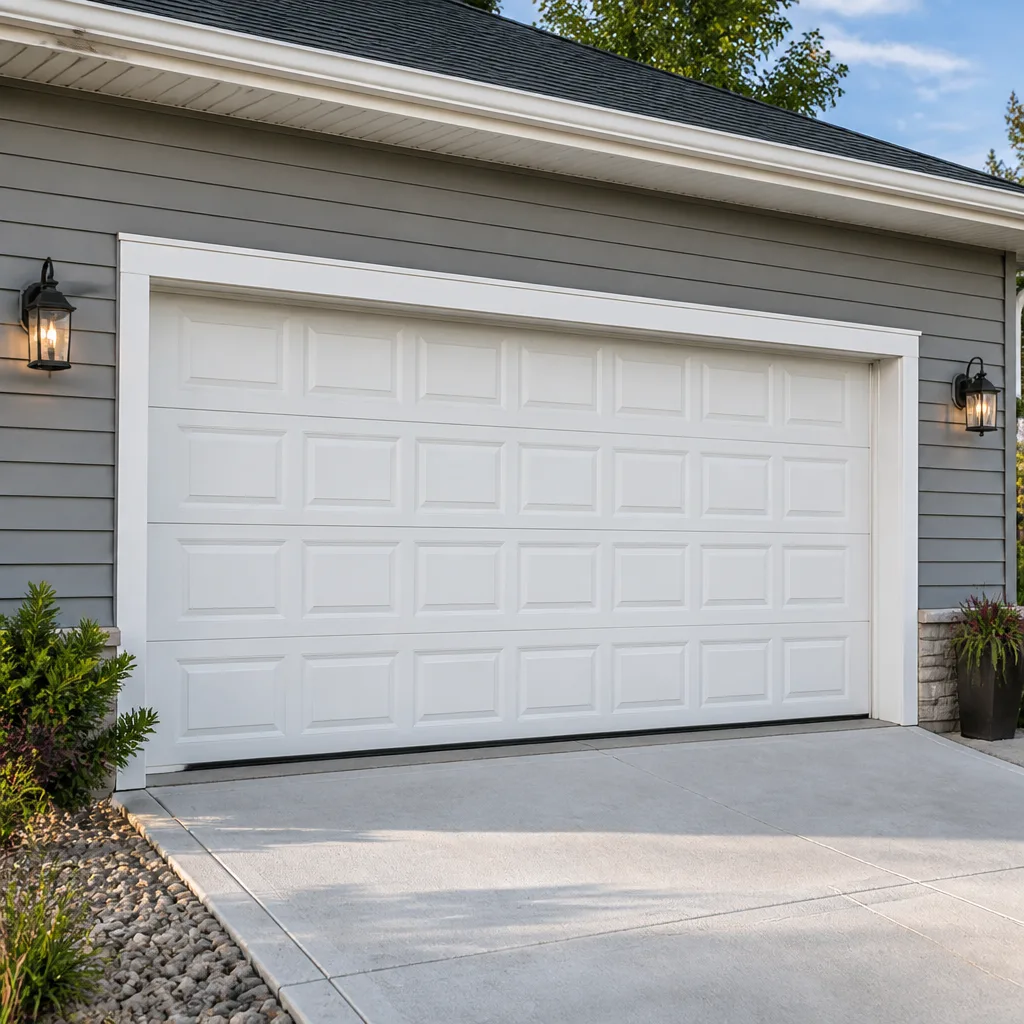 Raised-panel steel
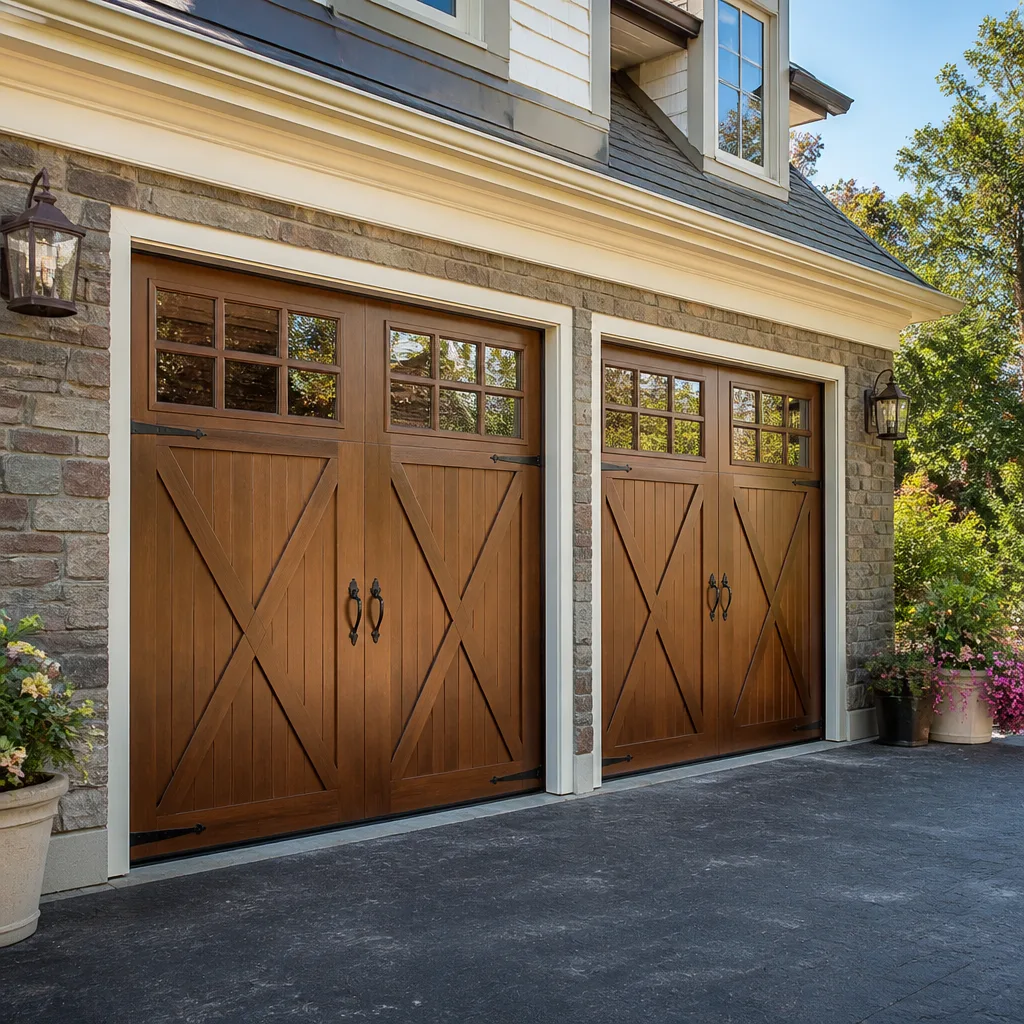 Carriage house
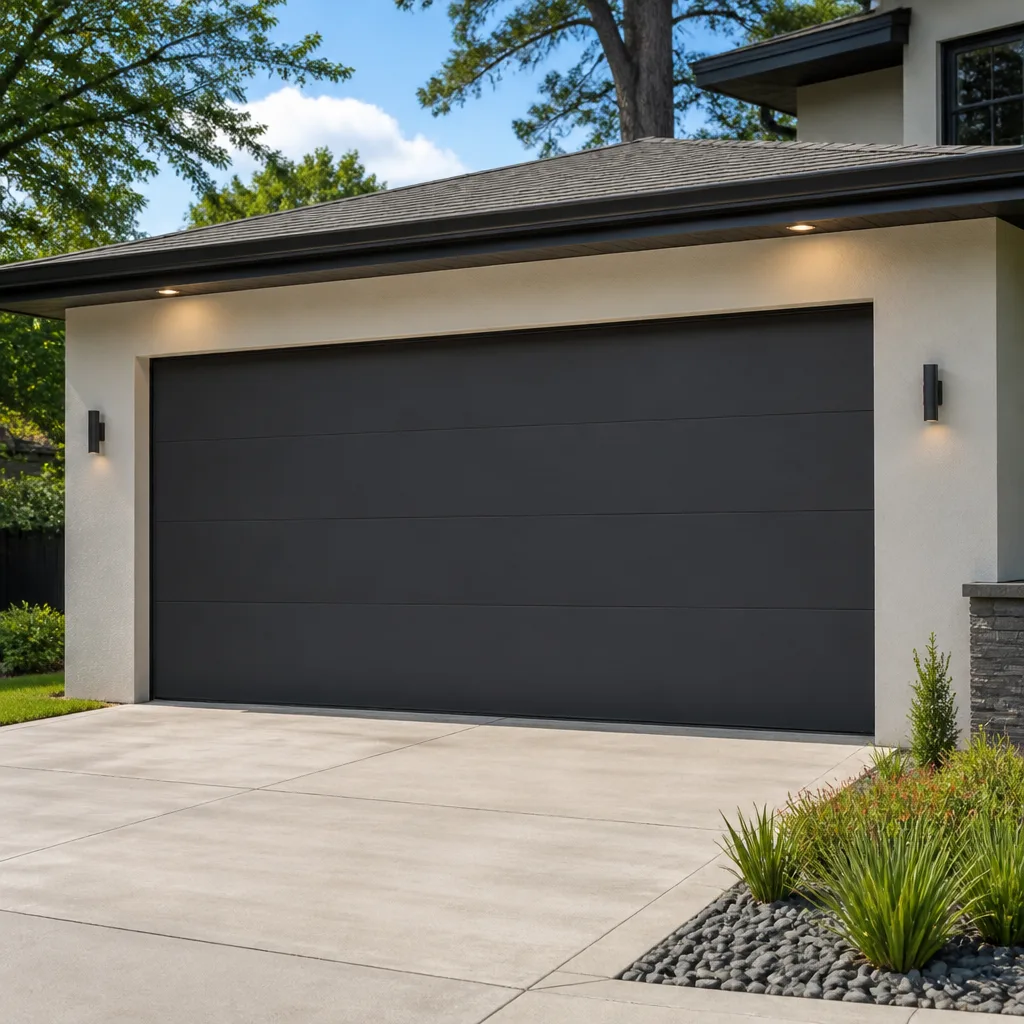 Modern flush
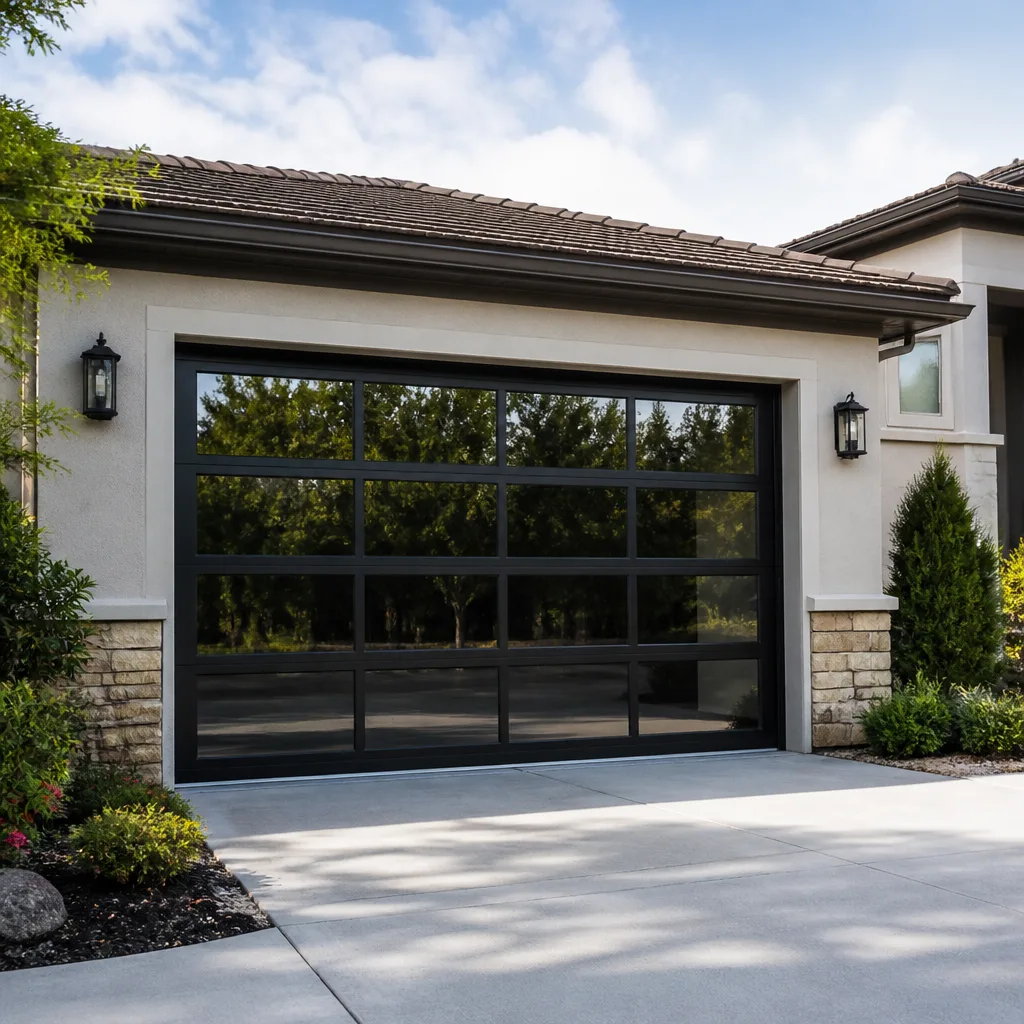 Full-view glass
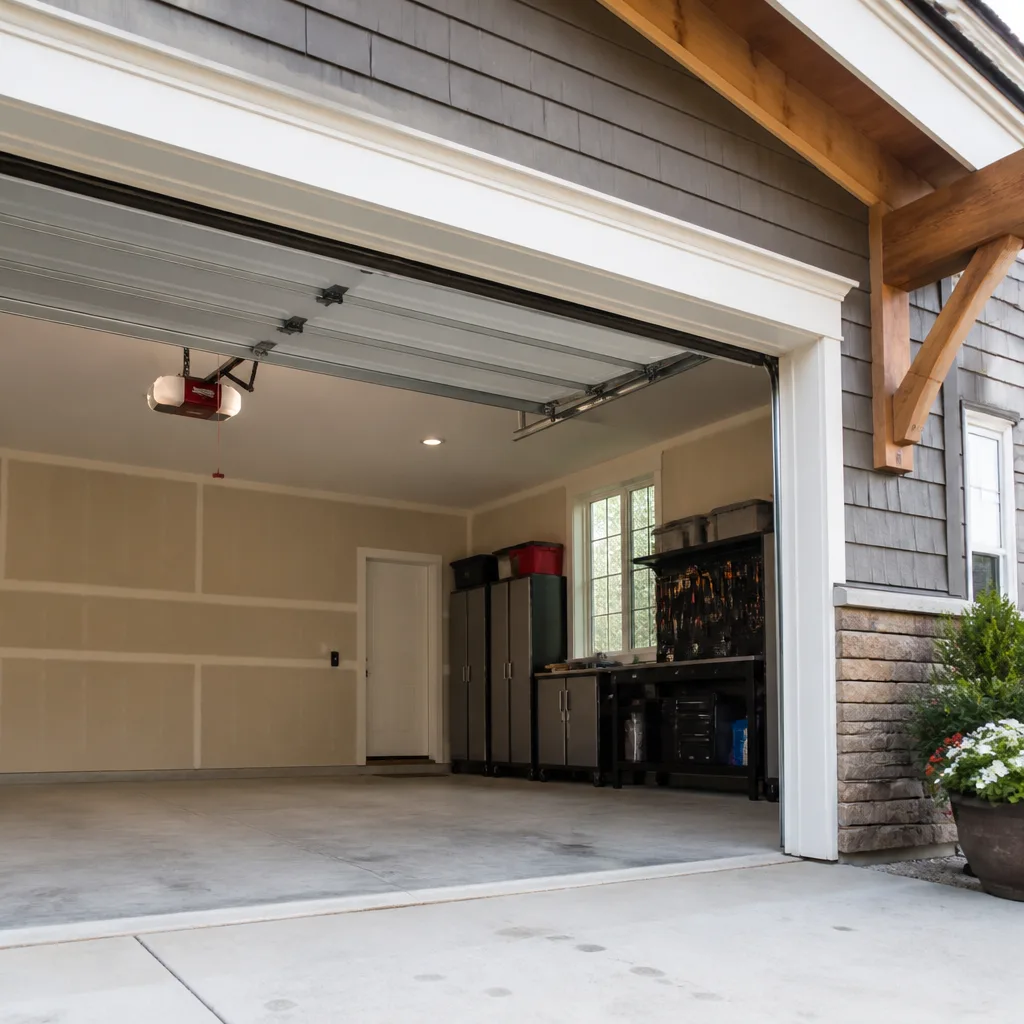 LiftMaster openers
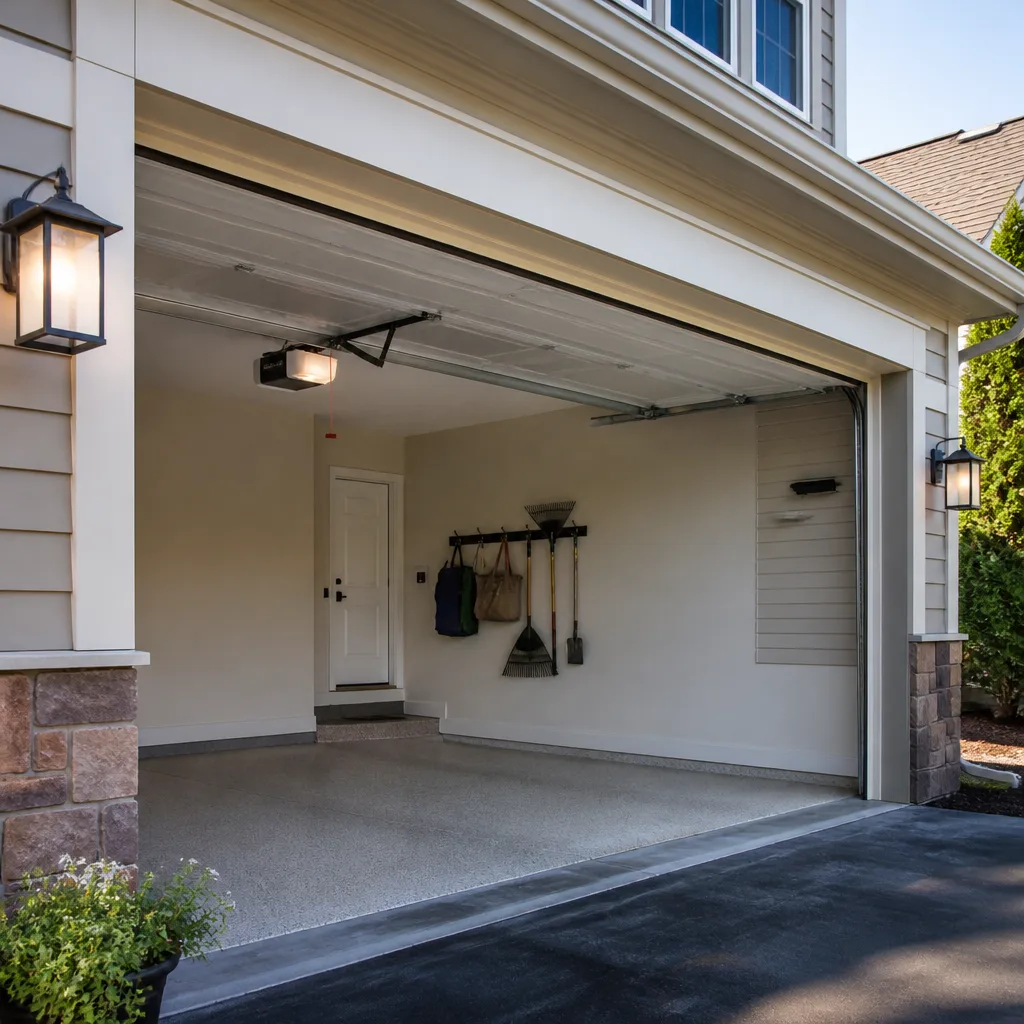 Chamberlain openers
Full 25-point door and opener safety check with every visit - springs, cables, rollers, tracks, and your LiftMaster or Chamberlain opener included
You get a price before we start. It does not change when the truck arrives.
Get your free estimateThe Complete Guide to Garage Doors in Newport News
Most homeowners assume a garage door fails because of age. In our experience across Newport News, age is rarely the deciding factor. The doors that break down early are usually the ones where one small condition went unnoticed for a season too long: a dry roller, a loose track bolt, a spring that’s been carrying a load it wasn’t sized for. Newport News has an unusual mix of housing stock, from postwar ranches in Hidenwood to newer builds out in Denbigh, and each type wears differently. This guide walks through what actually drives wear here, how to match a door to our climate, and a realistic timeline for repair, replacement, or an opener upgrade.
Quick Answer
A garage door in Newport News usually lasts 15 to 30 years for the panels and 7 to 12 years for the springs, depending on cycle count and how well the hardware is maintained. Repair almost always makes sense when the door structure is sound. Replacement makes sense when panels are dented, the door is out of balance, or you’re chasing insulation. Opener upgrades are worth it when the unit is over a decade old or the safety sensors keep tripping. Whitman Garage Door Repair handles all three under one roof, and estimates are free.
Styles & brands we work with
- Raised-panel steel
- Carriage house
- Modern flush
- Full-view glass
- LiftMaster openers
- Chamberlain openers
Table of Contents
- How a Garage Door Actually Works
- Matching Your Door to Newport News Weather
- What Older Newport News Neighborhoods Reveal
- Repair, Replace, or Upgrade: A Realistic Timeline
- Big-Box Installer vs. Brand-Agnostic Specialist
- Choosing and Servicing Your Opener
- Garage Door Safety: What to Check and What to Leave Alone
- A Simple Maintenance Routine
How a Garage Door Actually Works
A sectional garage door is a balanced system, not a slab on a motor. The springs carry the door’s weight so the opener only has to nudge it along the track. That’s why a snapped spring makes the door feel impossibly heavy and why forcing an opener against a broken spring can strip a gear in seconds. Understanding the parts helps you describe a problem clearly when you call, and it helps you judge whether a quote makes sense.
The main components and what they do:
- Torsion or extension springs – store the energy that counterbalances the door. Torsion springs sit on a shaft above the door; extension springs run along the horizontal tracks.
- Track and rollers – guide the door up and back. Rollers wear out quietly and start squealing or rumbling before they fail.
- Cables – connect the springs to the bottom bracket. They’re under extreme tension at all times.
- Hinges and bottom bracket – hold the panels together and anchor the cable.
- Opener and drive system – chain, belt, screw, or jackshaft. The motor lifts a balanced door; it doesn’t lift an unbalanced one for long.
Springs are rated in cycles, not years. A door that opens and closes four times a day racks up far fewer cycles than one on a busy household schedule. That single fact explains why two identical doors on the same street can have wildly different spring lifespans. When you call for garage door repair, knowing whether your door gets heavy use or light use helps us give you a straight answer on what to expect.
Matching Your Door to Newport News Weather
Newport News sits in a mixed climate: hot, humid summers and occasional hard freezes in winter. That combination is harder on a garage door than either extreme alone. Humidity swells wood and works its way into seams on painted steel. A hard freeze can stiffen lubricant and stress a spring that’s already near the end of its cycle life. The door has to handle both, which is why material and insulation choices matter more here than they would in a drier climate.
How the main materials compare for this area:
- Steel – the most common choice. Holds paint well, resists humidity better than wood, and comes in insulated and non-insulated versions. Dents are the main weakness.
- Aluminum – lighter and rust-resistant, good for larger doors, but dents more easily than steel.
- Wood – beautiful and repairable, but it needs regular sealing to handle humid summers. Best for covered or protected openings.
- Composite and vinyl – low maintenance and stable in humidity, though fewer style options.
Insulation is worth thinking through. An uninsulated steel door can get hot in summer and cold in winter, and it does nothing to buffer noise. If your garage shares a wall with living space, or you use it as a workshop, an insulated door pays back in comfort. If it’s purely a parking space, standard steel is fine. The right door for how you actually use the space beats a bigger price tag every time.
What Older Newport News Neighborhoods Reveal
Drive through Denbigh or Hidenwood and you’ll notice something the newer subdivisions don’t have: a high concentration of doors still running on spring systems that manufacturers stopped making years ago. Homes built in the middle of the last century often have extension springs, odd track spacing, or opener mounts that don’t match anything on a current shelf. It’s not a defect. It’s just age, and it changes what a repair looks like.
Here’s what that means in practice:
- Discontinued springs aren’t a dead end. A specialist can measure the wire gauge, inside diameter, and length and match a spring to the door, even when the original part number is long gone.
- Extension-to-torsion conversions are common. Many older doors were built with extension springs along the tracks. Converting to a torsion system improves safety and smoothness, though it’s a job for a trained technician.
- Opener mounts often need adapting. Older ceiling framing may not line up with a modern opener’s rail, so the install takes a little more planning.
- Track alignment drifts. Settling and repeated seasonal movement can pull older tracks out of plumb, which shows up as a door that binds or squeals.
If you’re in one of these neighborhoods and your door has never been serviced, it’s worth having someone look at the whole system rather than just the part that failed. A door that’s been limping along on 40-year-old hardware usually has more than one thing worth addressing.
Repair, Replace, or Upgrade: A Realistic Timeline
One of the most common questions we get is whether a door is worth fixing. The honest answer depends on three things: the condition of the panels, whether the door is balanced, and how much of the hardware is original. Here’s a practical way to think about the decision at each stage.
Repair is usually the right call when the door structure is sound and the problem is mechanical. A broken spring, a worn roller, a misaligned track, or an opener that won’t reverse are all repair jobs. Springs typically last 7 to 12 years; rollers and cables wear on a similar timeline. If the panels look good and the door runs straight, there’s no reason to replace it.
Replacement makes sense when panels are dented beyond repair, the door is chronically out of balance, or you’re upgrading insulation for a space you actually use. A well-installed steel door typically lasts 15 to 30 years, so replacement is a once-in-a-generation decision for most households. It’s also a good time to switch from extension to torsion springs if you’re on an older system.
Opener upgrade is worth considering when the unit is over a decade old, when safety sensors keep tripping, or when you want smart-home features like Wi-Fi control and battery backup. Modern openers from brands like LiftMaster, Chamberlain, and Genie have come a long way in quietness and reliability. If the door itself is fine, a new opener can feel like a whole new system.
A general rule: if you’re spending more than the cost of a new door over a couple of years on repairs, replacement starts to make sense. But that’s a judgment call, and it’s one worth making with someone who works on all the major brands rather than one who sells a single line. For a closer look at your options, our overview of Whitman Garage Door Repair explains how we approach each type of job.
Big-Box Installer vs. Brand-Agnostic Specialist
Big-box stores sell garage doors and often subcontract the install. That model works fine for a straightforward replacement on a standard opening. Where it gets thin is when the job involves anything unusual: an odd-sized opening, a discontinued spring, an opener that doesn’t match the door, or a warranty question months down the road. The installer who shows up may not be the one who handles the follow-up.
A brand-agnostic specialist sees the same problem from a different angle. Because we work on LiftMaster, Chamberlain, Genie, Clopay, Amarr, Wayne Dalton, Craftsman, and Raynor side by side, we’re not steering you toward one manufacturer’s door. We’re looking at what your opening, your usage, and your budget actually call for. That’s a different starting point than a sales floor.
The practical differences you’ll notice:
- Diagnosis first. We look at the whole system before recommending a part, because a “broken opener” is sometimes a door that’s out of balance.
- Parts on hand. A specialist carries common springs and hardware, which shortens the gap between diagnosis and fix.
- One company, whole lifecycle. Repair, opener service, and installation all come from the same place, so there’s no handoff between a seller and an installer.
- Straight answers on brands. If your existing door is a Clopay and it’s fine, we’ll say so, even if a replacement would be a bigger ticket.
None of this is a knock on big-box stores. They serve a purpose. It’s just that a garage door is a system, and systems are best handled by people who work on them every day.
Choosing and Servicing Your Opener
An opener is the part of the system homeowners interact with most, and it’s also the part with the most moving pieces: the motor, the drive, the safety sensors, the wall control, the remotes, and often a Wi-Fi module. When something’s off, the symptom rarely points straight at the cause. A door that won’t close could be a misaligned sensor, a bound track, or a logic board fault, and they all look the same from the driver’s seat.
Here’s how we usually sort through it:
- Check the door first. Disconnect the opener and lift the door by hand. If it’s heavy or binds, the problem is the door, not the opener.
- Check the sensors. The two small eyes near the floor should be aligned, clean, and lit steady. A blinking light usually means misalignment or an obstruction.
- Check the remotes and wall control. If the wall control works but remotes don’t, it’s usually a programming or battery issue, not the motor.
- Check the drive and logic. Grinding, humming without movement, or random reversals point to the drive gear, capacitor, or board, which calls for a technician.
On the selection side, the differences between brands matter less than the drive type and features. Belt drives are quiet and good for attached garages. Chain drives are durable and a bit louder. Jackshaft openers free up ceiling space and suit high-lift or side-mount setups. Wi-Fi and battery backup are worth having if you like the convenience or want the door to work during a power outage. Whatever you choose, our garage door opener repair service covers the brands most Newport News homes already have.
Garage Door Safety: What to Check and What to Leave Alone
Most garage door parts are safe to inspect. Springs, cables, and the bottom bracket are not. Torsion springs store an enormous amount of energy, and a cable under tension can cause serious injury if it slips. This is one area where we’d rather you call than take a swing at it yourself.
What you can safely check:
- The door’s balance. Disconnect the opener and lift the door halfway. It should stay put. If it drops or rises on its own, the springs need attention.
- The safety sensors. Confirm both lights are on and steady, and clear anything blocking them.
- The auto-reverse. Place a roll of paper towels under the door and close it. It should reverse on contact.
- The hardware. Look for loose bolts, frayed cables, or cracked hinges, and note what you find for the technician.
What to leave to a professional: spring replacement, cable replacement, bottom bracket work, and any track adjustment that requires loosening tension. If a spring has snapped, don’t run the opener, and keep the door closed until someone looks at it. The door will feel much heavier than usual, and forcing it can cause more damage. A trained technician has the right winding bars and the experience to do the job safely.
A Simple Maintenance Routine
A garage door doesn’t need much, but the little it needs pays off. A few minutes a couple of times a year will extend the life of your springs, rollers, and opener, and it’ll catch small problems before they turn into Saturday-morning surprises.
- Lubricate the moving parts. A garage-door-specific lubricant on the rollers, hinges, and spring coils (not the tracks) keeps things quiet and reduces wear.
- Wipe down the tracks. A dry cloth removes grit that grinds on the rollers. Don’t grease the tracks; they’re meant to run dry.
- Check the balance. Disconnect the opener and lift the door halfway. It should stay put without help.
- Test the safety reverse. Put a roll of paper towels under the door and close it. It should reverse on contact.
- Look and listen. Note any new squeaks, rumbles, or wobbles. A door that’s suddenly louder is often telling you something’s loose.
- Check the weather seal. The bottom seal keeps rain and cold air out. If it’s cracked or hard, it’s a cheap fix that keeps the door working smoothly.
If your home is in one of the older neighborhoods around Newport News, add a look at the spring system and cables to that list. Older hardware benefits from an annual once-over, and it’s a good time to ask whether a conversion to torsion makes sense.
Common Mistakes to Avoid
- Forcing an opener against a heavy door. If the door is hard to lift by hand, the springs are failing, and the opener will burn out trying to compensate. Stop and get the springs looked at.
- Greasing the tracks. It feels like it should help, but grease collects grit and makes the rollers drag. Tracks should stay clean and dry.
- Replacing one spring when both are worn. Springs are usually installed as a matched pair and wear at the same rate. Replacing one leaves the other to fail soon after.
- Skipping the balance test after a repair. A door that isn’t rebalanced after a spring change will wear out its opener and put stress on the tracks.
- Assuming a noisy door is normal. A door that’s suddenly louder is usually telling you a roller, hinge, or track is loose. Address it early and it stays a small job.
- Buying an opener without checking the door. A new opener won’t fix a binding door. Diagnose the door first, then decide whether the opener needs replacing.
- Ignoring the weather seal. A worn seal lets in moisture and cold air, and it stresses the door’s bottom section over time. It’s one of the cheapest fixes on the whole system.
See the difference
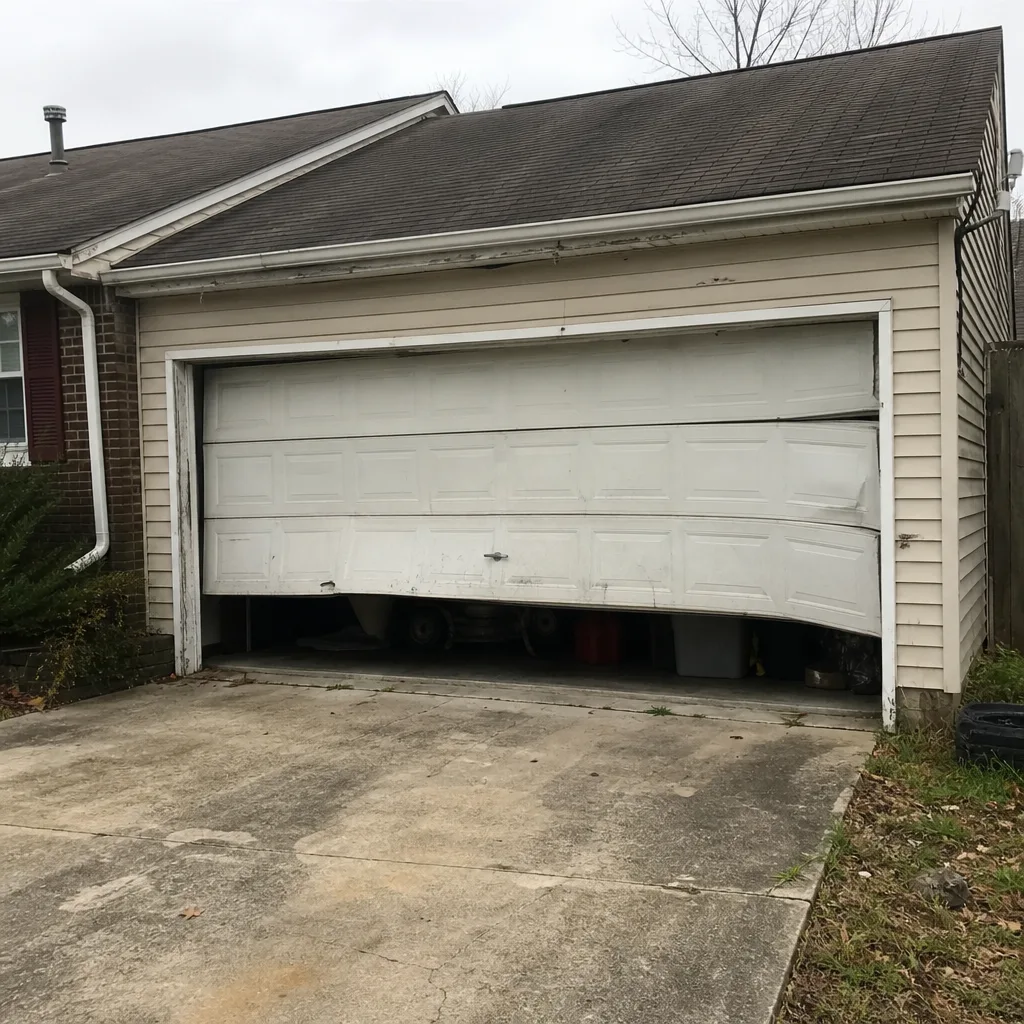 Before
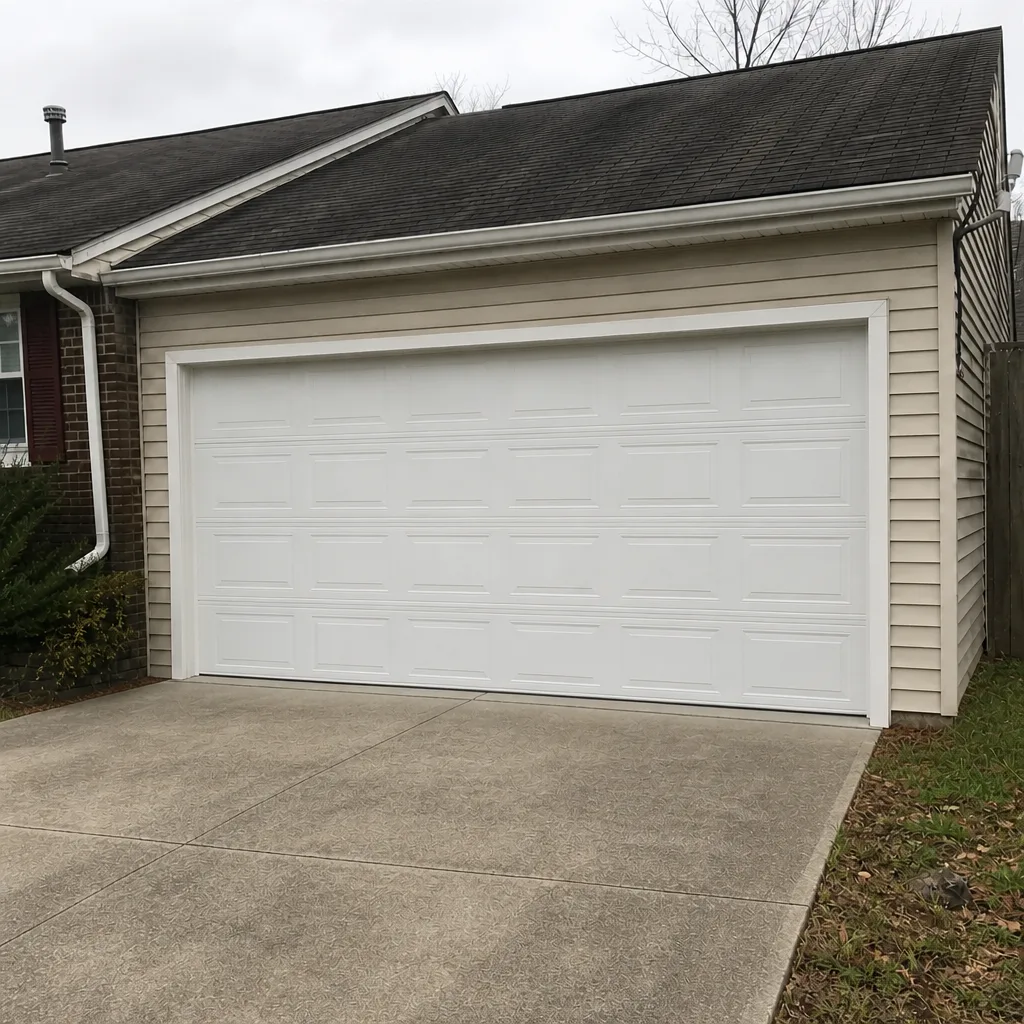 After
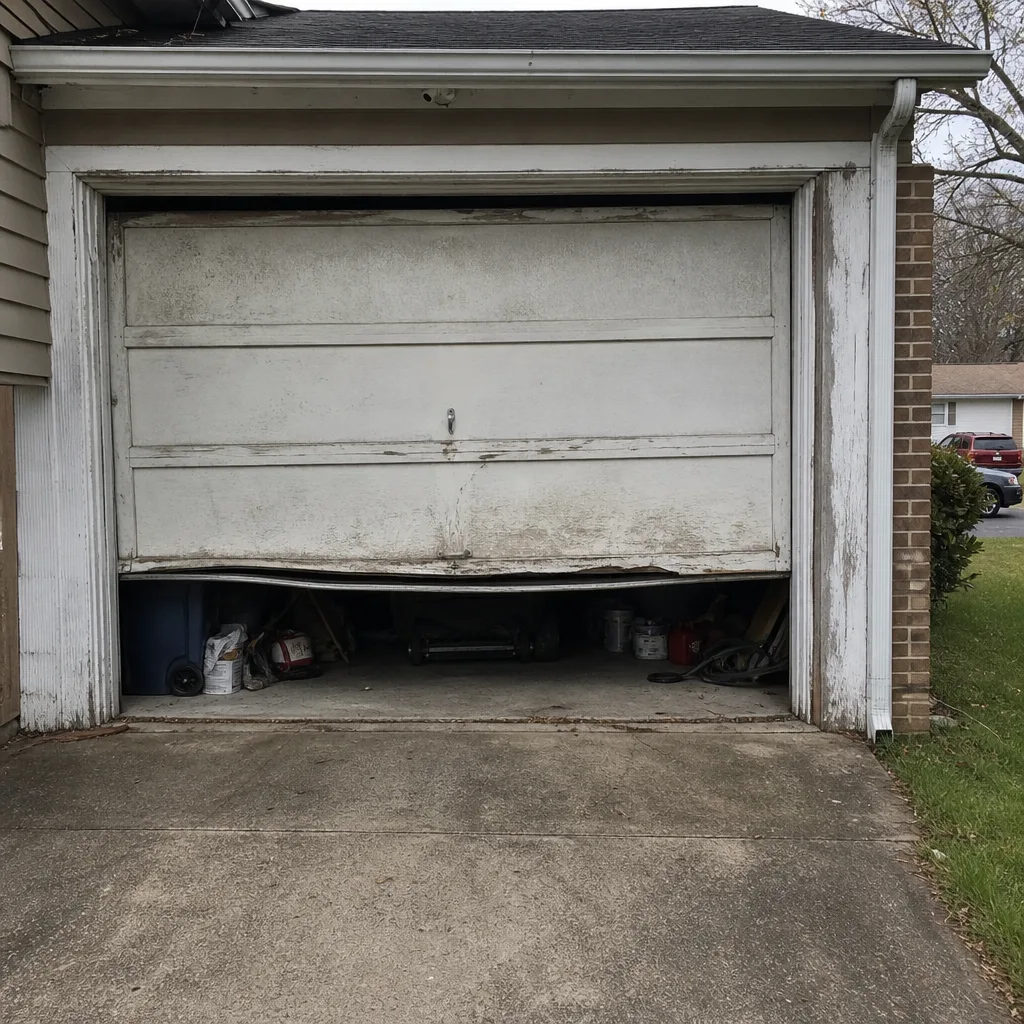 Before
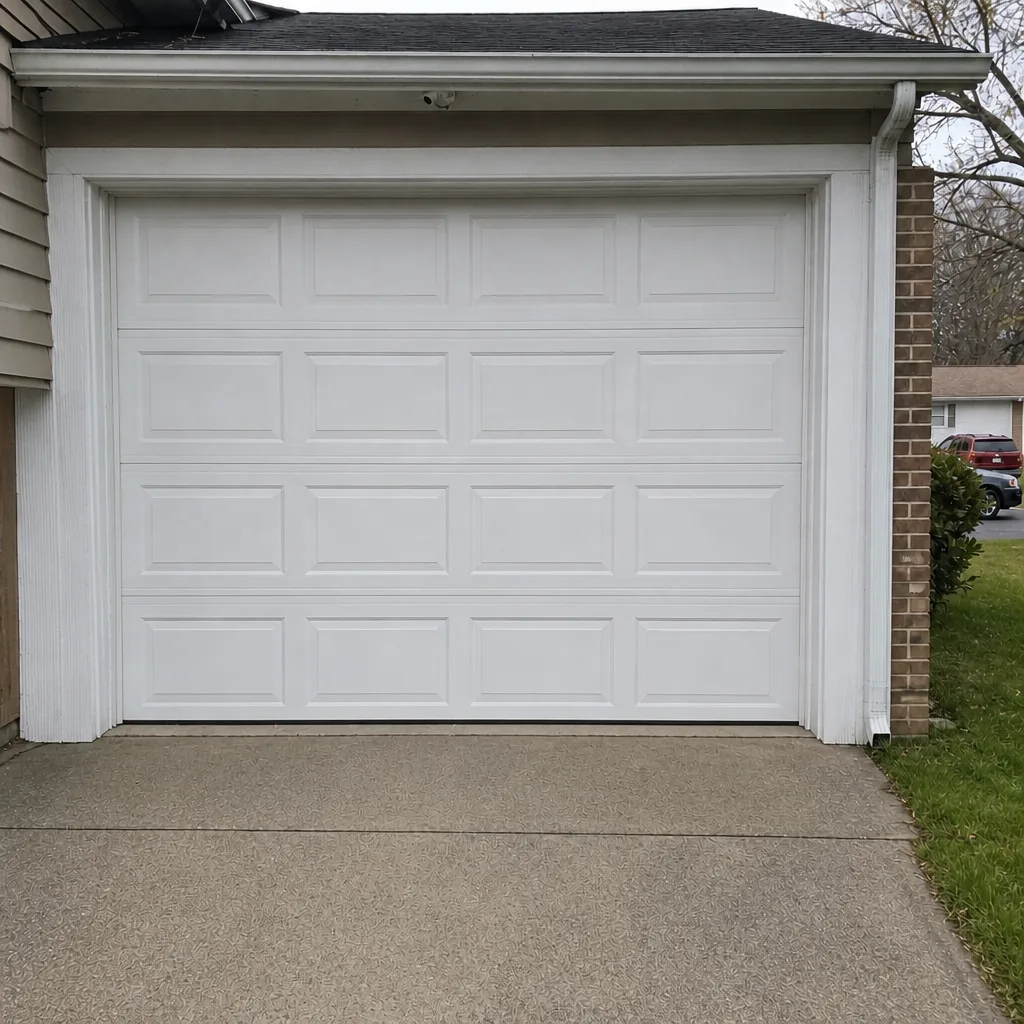 After
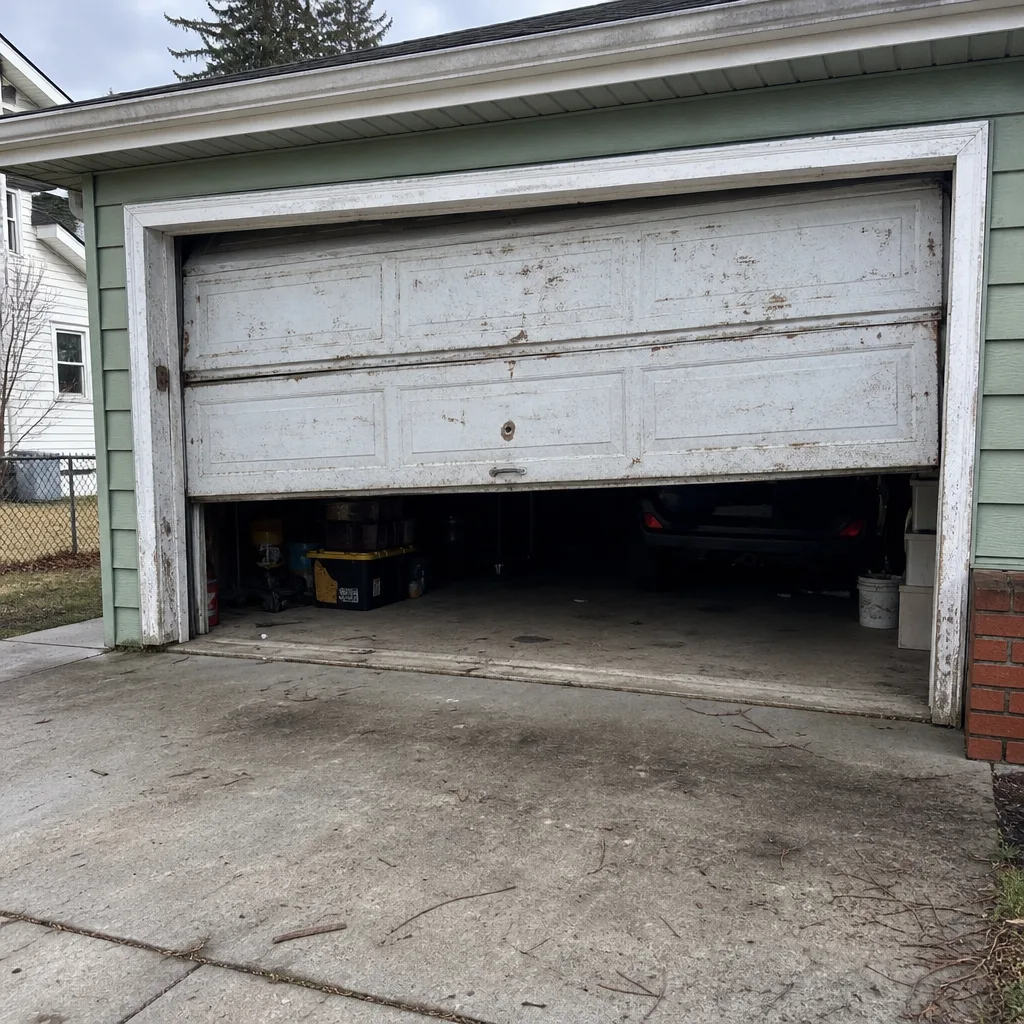 Before
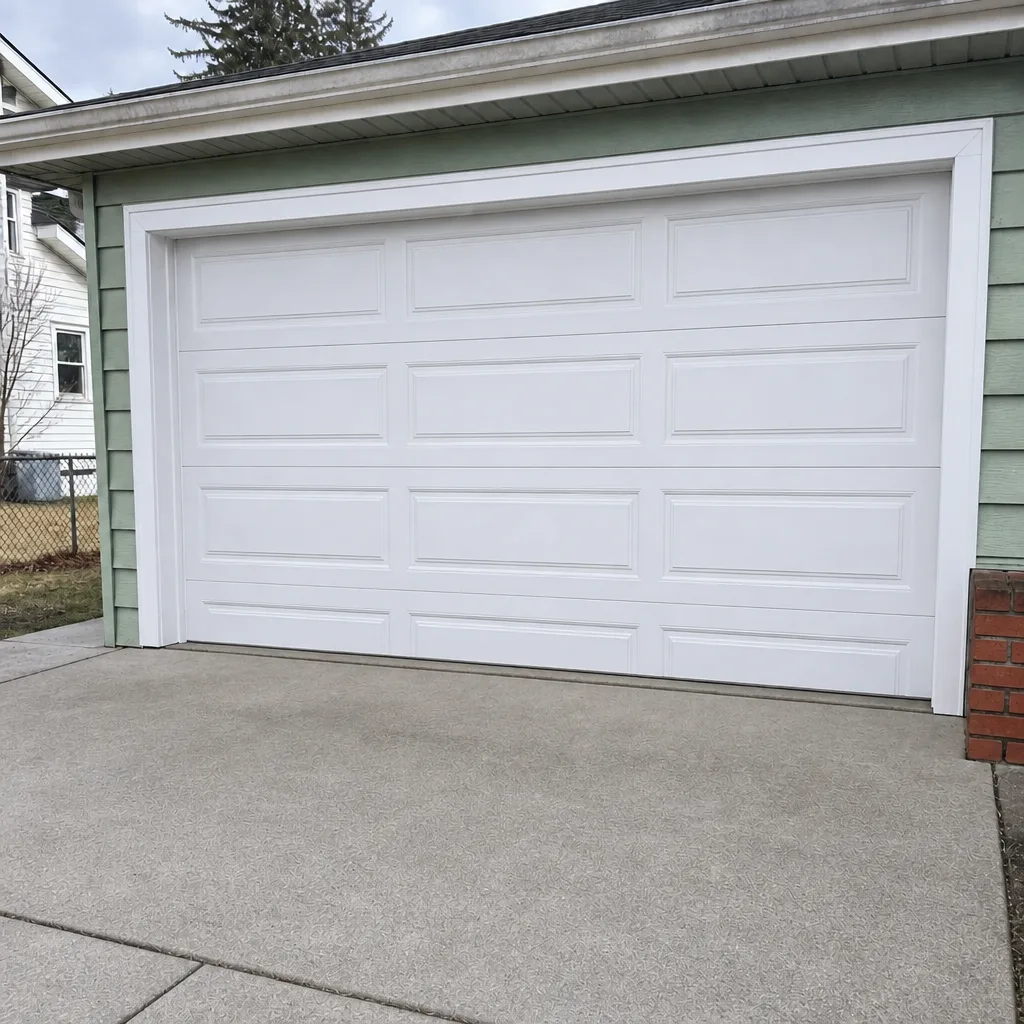 After
When to Call a Professional
Some things are worth a call. A snapped spring, a door that’s come off its track, a cable that’s frayed or slack, or an opener that hums without moving are all signs the system needs a trained eye. So is a door that’s been getting heavier to lift, or one that reverses for no clear reason. Springs, cables, and the bottom bracket are genuinely dangerous to work on, and getting them wrong can cause serious injury. If you’re not sure, that’s reason enough to call. Whitman Garage Door Repair offers free estimates in Newport News, and we work on the brand you already have. Call (888) 967-0166 to set one up.
Frequently Asked Questions
Most steel garage doors last 15 to 30 years, while springs typically last 7 to 12 years depending on how many cycles they run each day. Our mixed climate, with humid summers and occasional hard freezes, puts some extra wear on hardware, so annual lubrication and a balance check go a long way. If the panels are sound and the door is balanced, repair is usually the right call rather than replacement.
Yes. A specialist can measure the wire gauge, inside diameter, and length of a discontinued spring and match a replacement to the door. That’s common in older neighborhoods like Denbigh and Hidenwood, where extension springs and older track systems are still in use. It’s often a good opportunity to talk about converting to torsion for smoother, safer operation.
Repair when the panels are sound and the problem is mechanical, such as a broken spring, a worn roller, or a misaligned track. Replace when panels are dented beyond repair, the door stays out of balance, or you want better insulation for a space you actually use. If you’re spending near the cost of a new door on repairs over a couple of years, replacement starts to make sense.
A big-box store usually sells one line and often subcontracts the install, which can mean a handoff between the seller and the installer. A brand-agnostic specialist works on multiple brands and diagnoses the whole system before recommending a part. We service eight major brands, including Clopay, Amarr, Wayne Dalton, and Craftsman, so the recommendation follows what your door needs, not what a single manufacturer pushes.
Replace the opener when the unit is over a decade old, safety sensors keep tripping after adjustment, or you want Wi-Fi control or battery backup. But check the door first. A door that binds or is out of balance will make any opener work too hard, and replacing the opener won’t fix the underlying problem. Diagnose the door, then decide.
No. Torsion springs store an enormous amount of energy, and a cable under tension can cause serious injury if it slips. Spring replacement, cable work, and bottom bracket repairs should always go to a trained technician with the right tools. You can safely check the door’s balance and test the safety reverse, but leave the tension parts alone.
The Bottom Line
A garage door in Newport News has to handle a mixed climate and, in older neighborhoods, hardware that’s been running longer than most modern parts have been made. Repair usually makes sense when the structure is sound, replacement when panels are worn or insulation matters, and an opener upgrade when the unit is past its prime. The key is diagnosing the whole system, not just the part that failed. Whitman Garage Door Repair handles repair, opener service, and installation, and we work on the brand you already have. Estimates are free, and we’ll give you a straight answer on what your door actually needs.
Call (888) 967-0166 for a free estimate. We answer 24/7. Fast dispatch from 7am to 7pm, Sunday through Friday.
Written by the team at Whitman Garage Door Repair, serving Newport News since 2014.