
Last updated November 14, 2026
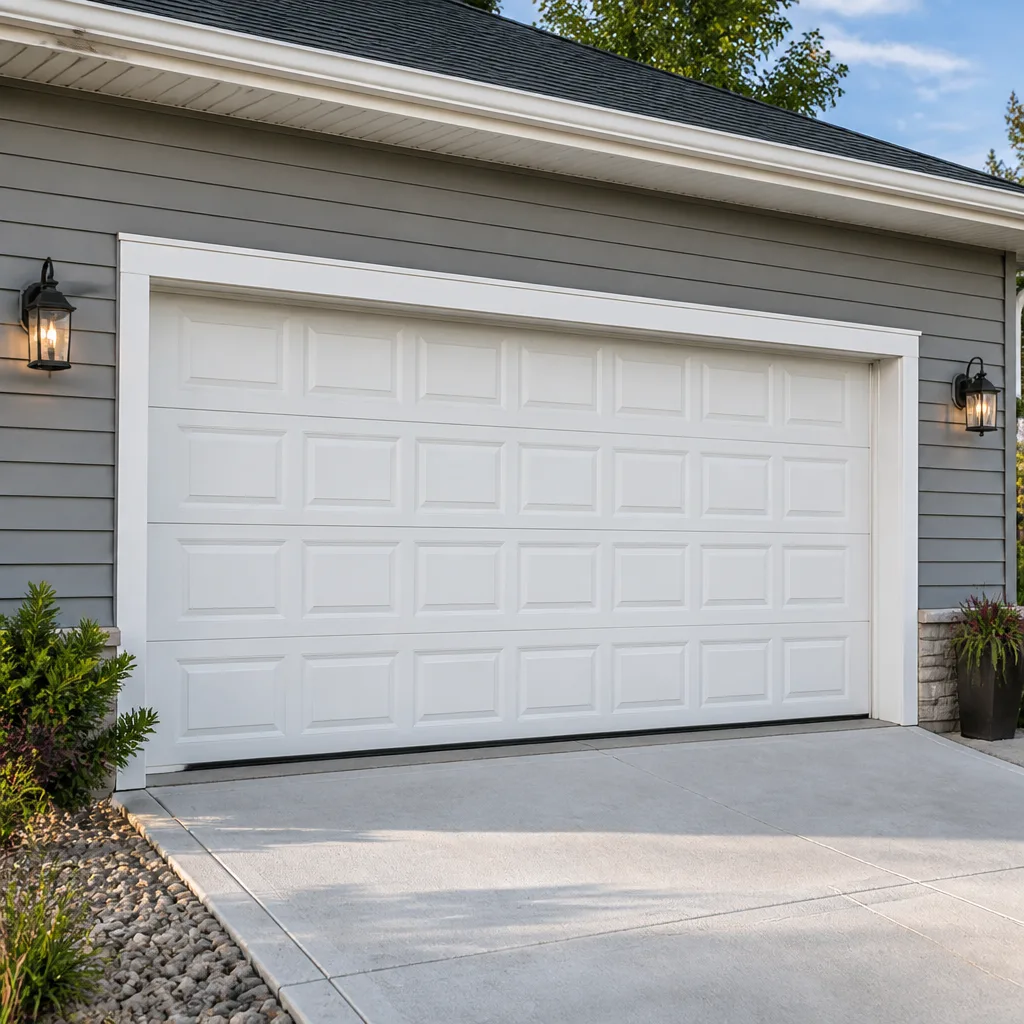 Raised-panel steel
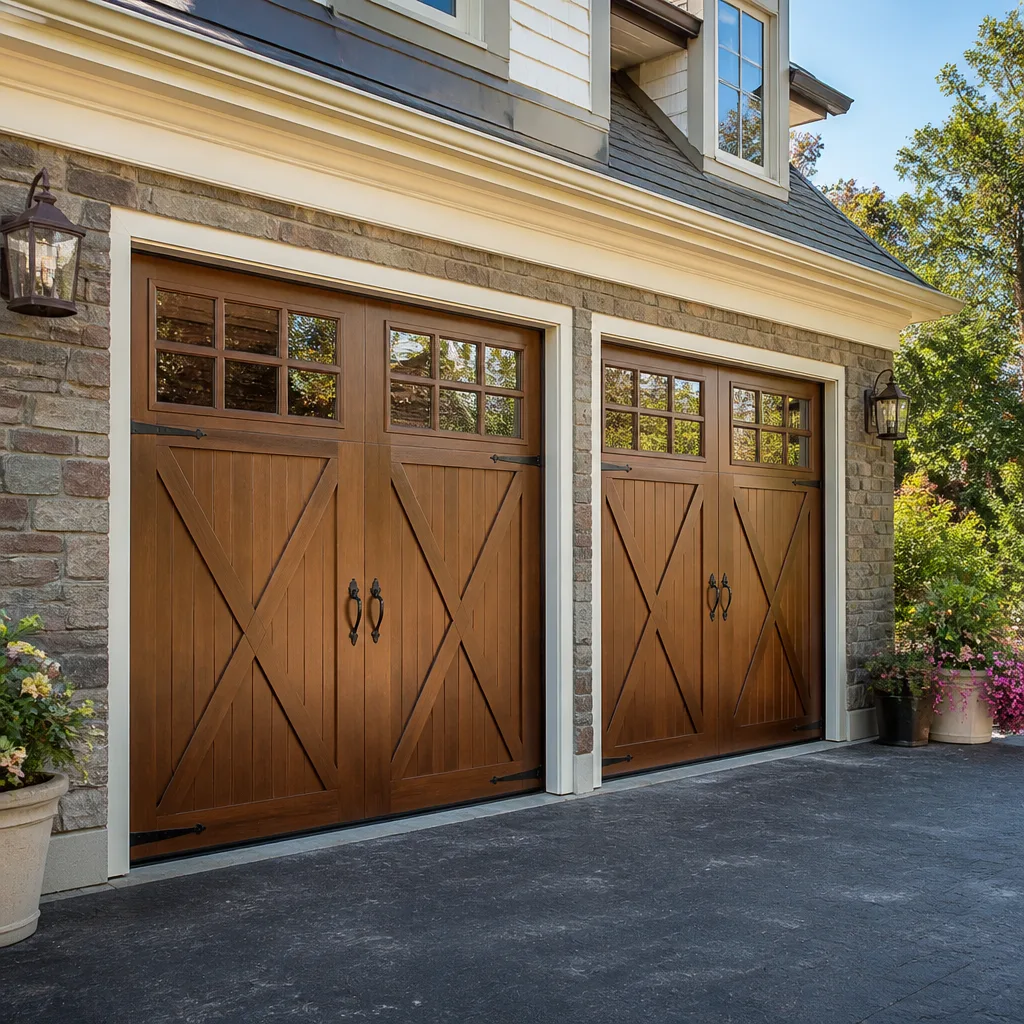 Carriage house
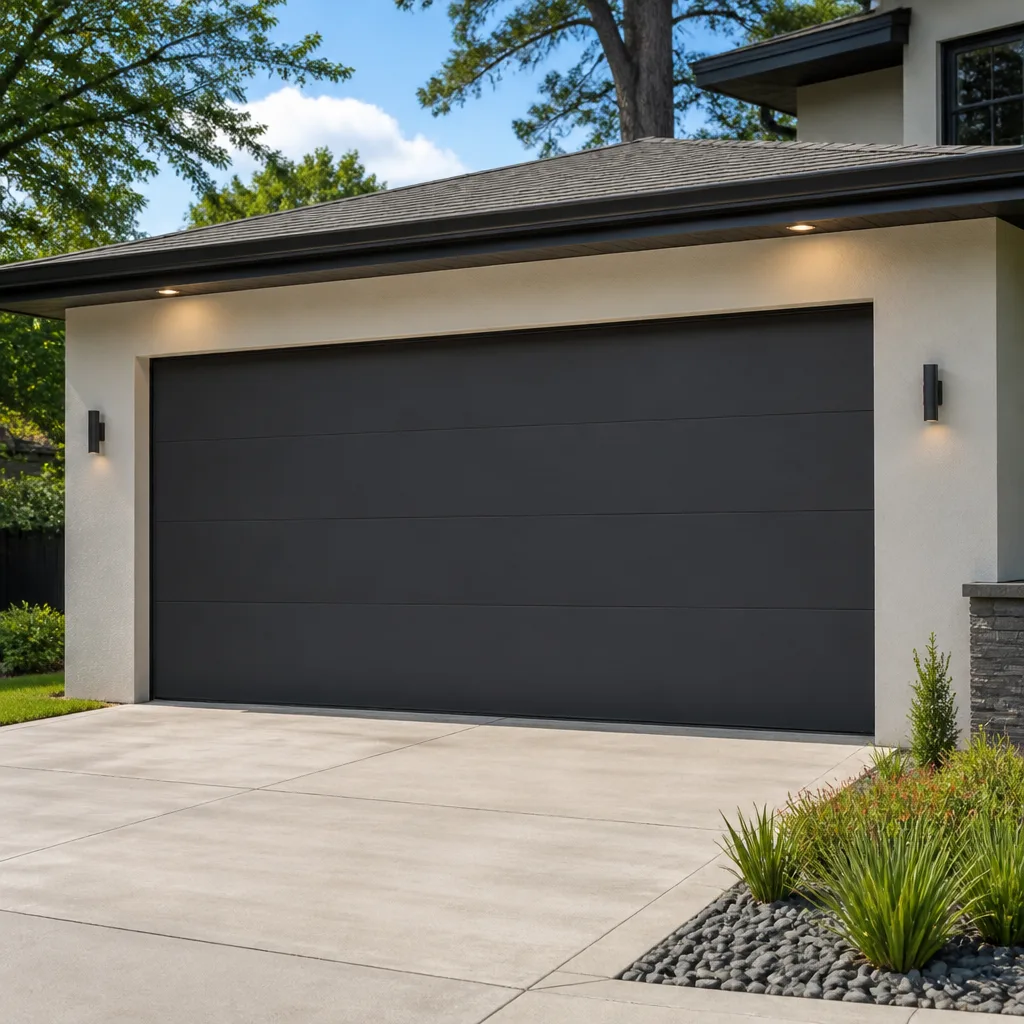 Modern flush
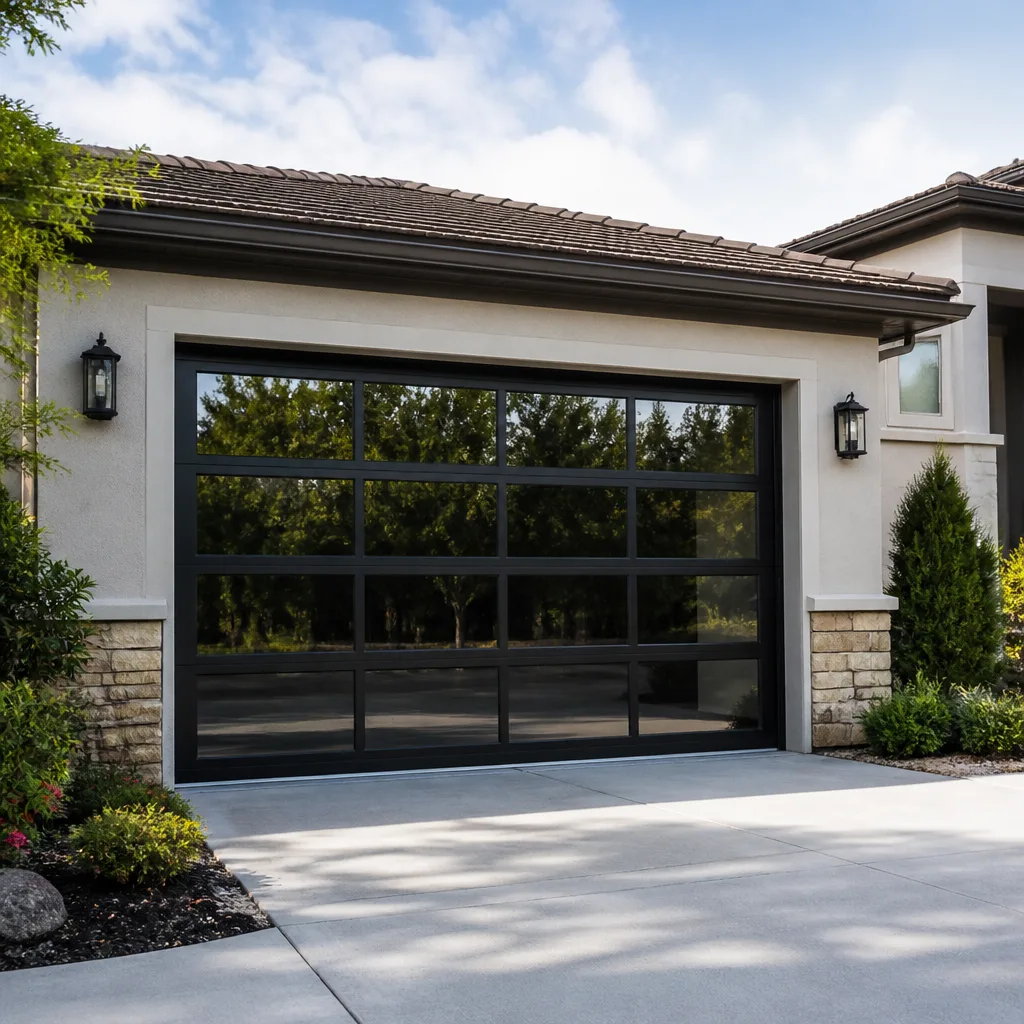 Full-view glass
 LiftMaster openers
 Chamberlain openers
Full 25-point door and opener safety check with every visit - springs, cables, rollers, tracks, and your LiftMaster or Chamberlain opener included
You get a price before we start. It does not change when the truck arrives.
Get your free estimateGarage Door Warning Signs: A Newport News Homeowner’s Reference Guide
A garage door that’s slightly slower to open than it was six months ago isn’t aging gracefully. It’s telling you which part is about to fail, and it usually starts telling you weeks before the door stops moving. Most homeowners in Newport News read that signal as normal wear, then get surprised when the door jams halfway up on a morning they need to be somewhere. We’ve watched this pattern for twelve years, and it almost always starts with a noise somebody ignored. This guide teaches you to read your door the way we do: by sound, by sight, and with a sixty-second balance test. You’ll learn which warning signs mean schedule a repair and which mean stop using the door right now. Because garage doors are all we do, we can tell you exactly what each symptom points to.
Quick Answer
The most important garage door warning signs in Newport News are grinding or squealing during travel, a door that hangs crooked or leaves uneven gaps at the floor, visible cable fraying, a door that won’t stay half-open, and any popping or banging sound from the springs overhead. If you see a frayed cable or hear a loud pop from the torsion bar, stop using the door and call a professional. Everything else can usually be scheduled within days, not minutes.
Styles & brands we work with
- Raised-panel steel
- Carriage house
- Modern flush
- Full-view glass
- LiftMaster openers
- Chamberlain openers
Table of Contents
- What Your Door’s Noises Are Telling You
- Visual Signs Homeowners Dismiss Too Easily
- The 60-Second Balance Test
- Local Conditions That Accelerate Wear
- The Severity Tiers: Schedule Soon or Stop Now
- Opener Warning Signs Most People Miss
- Seasonal Patterns Worth Watching For
- What to Write Down Before You Call
What Your Door’s Noises Are Telling You
Sound is the first and most reliable diagnostic tool a garage door gives you. A door that sounds the same in January and July is a door that’s running healthy. A door that develops a new sound is pointing at a component that’s changing. Here’s what each of the four most common noises usually means, based on what we find when we open the panel and inspect the hardware.
Grinding
Grinding is metal-on-metal contact, and it usually comes from dry or worn rollers traveling in a track that’s lost its lubrication or picked up grit. Left alone, grinding rollers score the inside of the track, and a scored track makes the whole door travel rougher, which puts more strain on the opener. If the grinding is coming from the opener head itself, that’s typically the gear and sprocket assembly, and it’s a common symptom on older LiftMaster and Chamberlain units.
Squealing
Squealing is high-pitched and usually rhythmic, once per roller per pass. This is almost always a lubrication issue along the hinges, rollers, and torsion bar bearings. It’s the least urgent of the four sounds, but it’s also the easiest to fix and the cheapest to ignore incorrectly. A door that squeals for months wears its moving parts faster than a greased door does.
Popping
A single loud pop from above the door is the sound of a torsion spring or a section of the spring assembly changing shape. Torsion springs are under heavy tension, and once one pops, the door may become extremely heavy to lift. This is not a sound to test your own repair skills on. High-tension springs and cables are the two most dangerous components on any garage door, and they require a trained technician with the right tools. If you hear a pop, stop using the door and call us.
Clunking
Clunking, especially at the start or end of travel, usually points to loose hinge bolts, worn nylon rollers, or a door panel that’s separated slightly from its hinge. It can also indicate that the door has drifted out of balance. A door that clunks every cycle is putting uneven load on the opener, which is the leading cause of opener failure we see in Newport News.
If you want help sorting one noise from another, our team handles garage door repair across the city and can usually identify the culprit in a single visit.
Visual Signs Homeowners Dismiss Too Easily
Sound gets attention. Sight gets dismissed. In our experience, the visual warning signs are the ones homeowners walk past for months before finally calling, and they’re often the ones that would have saved a bigger repair if acted on sooner. Walk around your closed door once a month and look at these four things.
An Uneven Gap at the Floor
Stand inside the garage with the door closed and look at the line where the door meets the floor. If you can see daylight under one side but not the other, or if the gap varies by more than a finger’s width, the door is out of level. That comes from a cable that’s stretched, a drum that’s slipping, or a track that’s shifted. An uneven gap also means the bottom seal isn’t doing its job, which matters more in Newport News than in drier climates because humid air and rainwater can find their way in under a door that doesn’t seal.
A Door That Hangs Slightly Crooked
Step back and look at the top edge of the door against the header. If the door isn’t parallel to the header when closed, or if one panel sits visibly higher than the other, the door is in a bind. That’s either a torsion system that’s lost tension on one side or a bent vertical track. Either way, running the opener on a crooked door accelerates wear on every hinge along that side.
Cables You Can See
The lift cables run along the sides of the door and terminate in the drum at the top of each track. They should look uniform, tight, and clean. Fraying, birdcaging (where the strands separate), or a cable that’s visibly kinked is a stop-using-the-door signal. Cables carry the full weight of the door, and a cable failure during travel can drop the door. Don’t try to re-seat or tighten a cable yourself.
Rust Streaks on the Tracks or Hinges
Rust streaks along the inside of the vertical tracks, or orange pitting at the hinge plates, tell you the hardware has lost its protective coating. This is common in older Newport News neighborhoods where doors have seen twenty or thirty humid summers, and where a bottom seal has been letting moisture sit against the lower hinges for years. Rust in the hinges means the hinge is thinner than it was designed to be and is a candidate for replacement before it fails.
The 60-Second Balance Test
A balanced door lifts with one hand and stays where you put it. An unbalanced door is working against its own springs, and the opener is carrying the difference. You can check this yourself in under a minute, and it tells you more about the health of your spring system than any other test we know.
Here’s how to do it safely:
- Close the door completely and unplug the opener from the wall outlet. Some openers also have a battery backup that needs its own switch off.
- Pull the manual release cord (it hangs down from the opener rail) so the door is disconnected from the opener.
- Lift the door by hand to about waist height, then let go gently. Don’t push it up or down. Just let go.
- Watch what happens. The door should stay where you left it, drifting no more than a few inches in either direction.
If the door slowly sinks to the floor, the springs have lost tension and are no longer counterbalancing the weight. If it slides upward on its own, one or both springs are over-tightened or the wrong size for the door. If it hangs crooked during the lift, you likely have a broken or stretched cable on one side. Any of the three means the door needs service before you reconnect it to the opener, because running the opener against a door that’s fighting it is the fastest way to shorten the life of the motor and gear assembly.
Reconnect the door by pulling the release cord back until it clicks, then plug the opener back in. If the door is heavier than you expected during the lift, don’t force it up. Just release and call us.
Local Conditions That Accelerate Wear
The mid-Atlantic climate here is hard on garage door hardware in ways that don’t always show up on a maintenance checklist. Newport News summers bring weeks of high humidity that makes the inside of a garage about as damp as a screened porch, and the winter temperature swings mean the metal in your door and tracks expands and contracts on a regular basis. That combination drives three specific failure patterns we see over and over.
- Rust streaks on tracks and hinges. Humidity settles into the cavity between a hinge plate and the door panel, and stays there. Over several seasons that spot starts to pit, and the pitting is what eventually kills a hinge.
- Pitting on the hinge plates and roller stems. Pitting isn’t just cosmetic. It changes the shape of the mating surfaces, and a pitted hinge no longer holds its adjustment cleanly, so the door starts to run a little out of alignment. That misalignment is what makes a door “clunk” on the way up.
- UV-degraded bottom seals. Virginia sun hits a west-facing garage door through the afternoon and hardens the rubber bottom seal long before the door itself shows damage. A stiff seal stops making contact with the floor, which lets insects and rainwater in and makes the door physically slam harder on the way down.
We also see this pattern more in established neighborhoods where doors have years behind them: Hidenwood, Riverside, Denbigh, and Hilton. Newer construction in Kiln Creek usually shows track adjustment issues before it shows rust. Same climate, different age, different first symptom.
The Severity Tiers: Schedule Soon or Stop Now
Not every warning sign is an emergency. Some are things you can watch for a few days. Others demand you stop using the door entirely. Here’s the framework we use when a homeowner calls to describe what they’re seeing.
Tier 1: Schedule Within a Week or Two
- A new squeal or light grinding during travel
- Minor rust streaks on vertical tracks
- A bottom seal that’s stiffened and stops sealing at the corners
- The door is a little slower than before but opens and closes without drama
These are mechanical wear items. They don’t fail overnight, but every week you ignore them shortens the life of the part next in line.
Tier 2: Schedule Within Days, Use Sparingly
- A door that clunks noticeably at the start of travel
- An uneven gap at the floor you can see with the door closed
- The door hangs visibly crooked
- Your 60-second balance test shows the door sinking or rising on its own
- The opener strains, stutters, or reverses partway through a cycle
Each of these is the door working against itself. The longer you run it, the more it costs to bring back into alignment.
Tier 3: Stop Using the Door
- Any visible cable fraying, birdcaging, or kinking
- A loud pop or bang from above the door (spring failure)
- A door that’s noticeably heavy when you try to lift it by hand
- A door stuck halfway and hanging by one side
- A door that closes on its own weight after a spring failure
These are the situations where an injury is possible. Torsion springs, cables, and the drums at the top of the tracks are under heavy tension even when the door is closed. They’re the components we don’t want a homeowner touching, and it’s the reason we recommend calling a trained technician the moment any Tier 3 sign appears.
Opener Warning Signs Most People Miss
The opener is the part of the system that homeowners notice last and understand least. Modern units are smarter than they used to be, and they tell you more than most people realize. If your opener is a LiftMaster or a Chamberlain, the built-in diagnostics on the head unit can even point to the exact fault, and a Genie will usually give you a light-blink code pattern when something’s wrong. We treat opener repair as its own diagnostic discipline for that reason.
How the opener signals trouble
- Stalling or reversing partway through a cycle. The opener’s safety system thinks it hit something. The cause is usually a binding door or a force-setting that has drifted, not a bad opener.
- Blooping or clicking when you press the remote, but no movement. Could be the remote battery, the wall control, the safety sensors, or a capacitor. Remote range dropping on one remote specifically usually means the remote itself, not the opener.
- Blinking lights or a beep pattern on the head. Every brand uses this differently. We check the manual for the exact model, watch the blink sequence, and cross it against the wall control.
- The door starts moving within a second of a command, then jerks. Usually the travel limits have drifted, which tends to happen after the door has gone out of balance.
- Safety sensor issues. The two sensor eyes near the floor need to see each other. Spider webs, a bumped mounting bracket, or a sun angle that hits the receiving eye directly will stop the door cold.
- Wi-Fi or smart-home module dropping offline. Often the module itself, sometimes the router placement. We can sort one from the other in a single visit.
Because we work on the brand you already have, we can look at any of the eight major makes without trying to talk you into a brand swap. For a stubborn opener, garage door opener repair starts with diagnosis, not replacement.
Seasonal Patterns Worth Watching For
Garage doors don’t fail randomly. The pattern in Newport News tends to run on a seasonal rhythm, and knowing it helps you look at the right thing at the right time of year.
Spring, after a humid start. The first warm, wet stretch of the year expands wood door frames and loosens the vertical track bolts that were snug all winter. If your door suddenly sounds different in April or May, check the track bolts first.
Summer, on the really hot stretches. Heat softens the bottom seal and works the lubricant out of the hinges faster than cooler weather does. This is also when UV degradation on the seal becomes visible. Run your hand along the bottom edge of the door; if the seal feels crunchy rather than soft, it’s on its way out.
Fall, when the temperature swings. The door’s metal expands and contracts day by day, and the spring tension can feel subtly different. If the door starts sinking slowly in your 60-second balance test in October when it stayed put all summer, the springs are telling you something.
Winter, the cold snaps. Cold makes grease stiff and springs more brittle. If a garage door is going to fail a spring, a cold snap is a common time. No popping, no bangs, no forced lifts in cold weather: if the door won’t open, call a pro.
We answer 24/7. Fast dispatch from 7am to 7pm, Sunday through Friday. If your door fails on a Saturday, we’ll book you for Sunday.
What to Write Down Before You Call
Homeowners who call with a few specific details get faster, cheaper, more accurate repairs than ones who call with “it’s broken.” This isn’t about making you diagnose the problem. It’s about giving us enough to walk in with the right parts on the truck and a clear plan for the visit. Here’s what to capture before you pick up the phone.
- The exact sound and when it happens. “Squeals on the way up but not down” is more useful than “makes noise.”
- The brand of your opener. LiftMaster, Chamberlain, Genie, Clopay, Amarr, Wayne Dalton, Craftsman, Raynor. All eight are brands we work on, so any of those is fine to name.
- The result of your 60-second balance test. Does the door sink, rise, stay, or hang crooked?
- Any light or beep codes from the opener head. Count the blinks if you can. Even a rough count helps.
- Whether the door is currently stuck open, stuck closed, or moving normally. This changes whether you’re calling about a same-day repair or a scheduled one.
- Whatever you can see of the cables. Just describe it. Don’t touch.
Put those six things in a note or text yourself, and by the time you call you’ll have most of what we need to set up a visit. If you’d rather just have us look, that’s fine too. Estimates are free, and the price is quoted and agreed before any work starts.
Common Mistakes to Avoid
- Assuming “slower than before” is normal aging. It isn’t. A door that’s six seconds slower than it was last year is losing spring tension or balance, and either one is fixable now and more expensive later.
- Trying to adjust a torsion spring yourself. Torsion springs and cables are under heavy tension and have injured more do-it-yourselfers than any other part of the door. This is the one system to leave to a trained technician.
- Greasing the track itself. The track should stay dry and clean. Grease in the track attracts grit and dust from the alley, and the grit wears your rollers out faster. Lubricate the hinges, rollers, and springs only.
- Running the opener on a door that’s out of balance. A crooked or sinking door is already working against the motor. Running the opener adds wear to the gear and sprocket assembly and shortens the life of the motor.
- Ignoring a single popped spring because the door “still lifts.” On a two-spring door, one broken and one working means the working spring is doing the full job alone. It will fail faster, and it can fail suddenly.
- Calling a general handyman for a spring or cable repair. Garage doors are one trade with a specialized set of tools and safety practices. A generalist may get the door back up, but the balance and tensioning have to be right or the door will wear fast.
- Skipping the once-a-month walk-around. Five minutes with a flashlight and your eyes catches more failure than any warning label.
Newport News homes see enough humidity and enough seasonal swing that the small signs add up quickly if you’re not looking. Our Whitman Garage Door Repair team handles all of it, and you don’t need to know which service to ask for. Tell us what the door is doing and we’ll sort out the rest.
See the difference
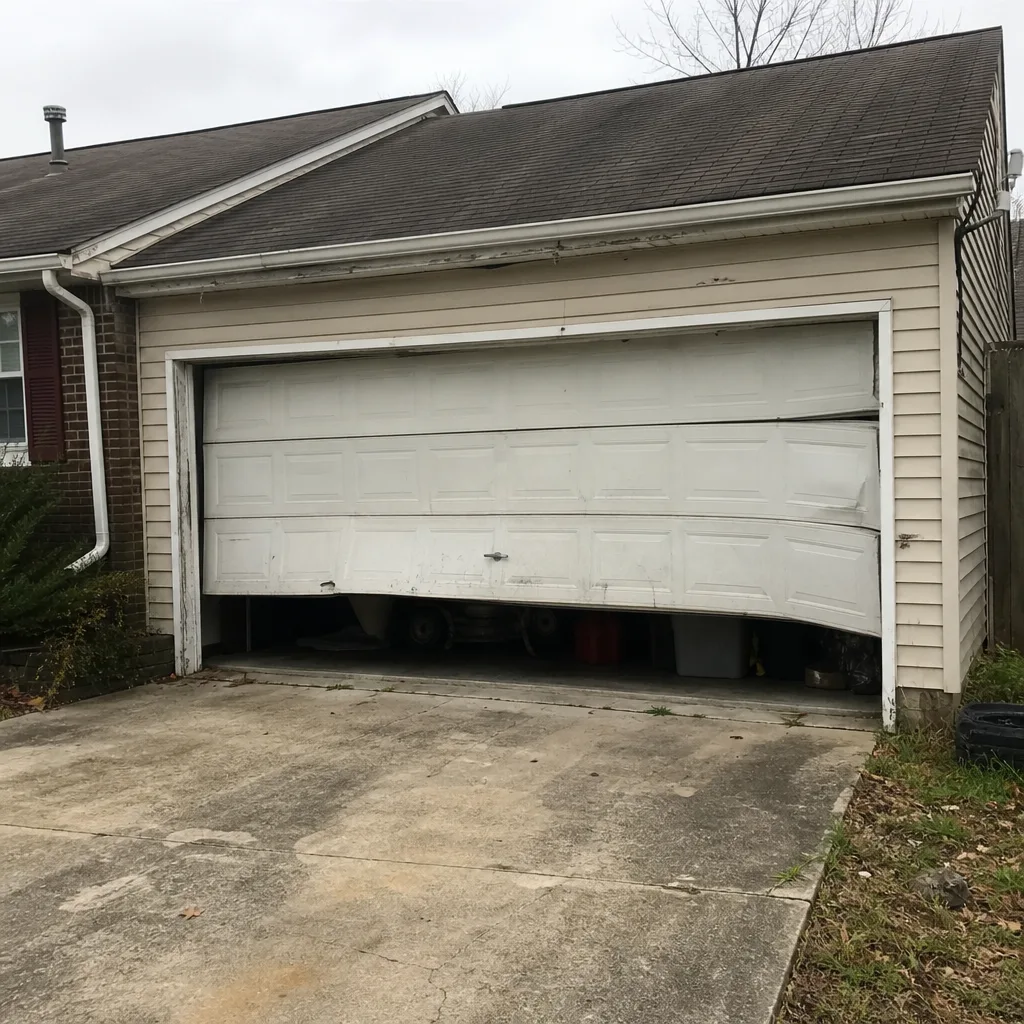 Before
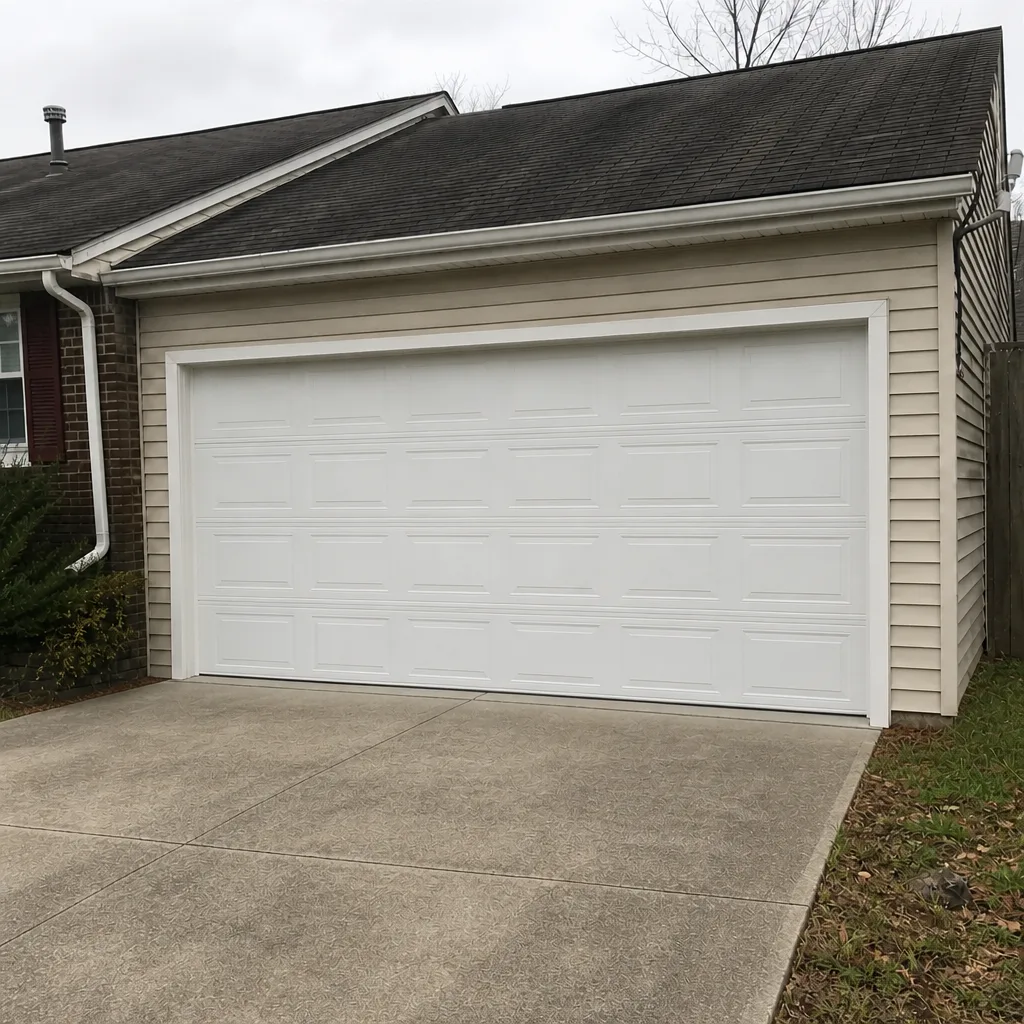 After
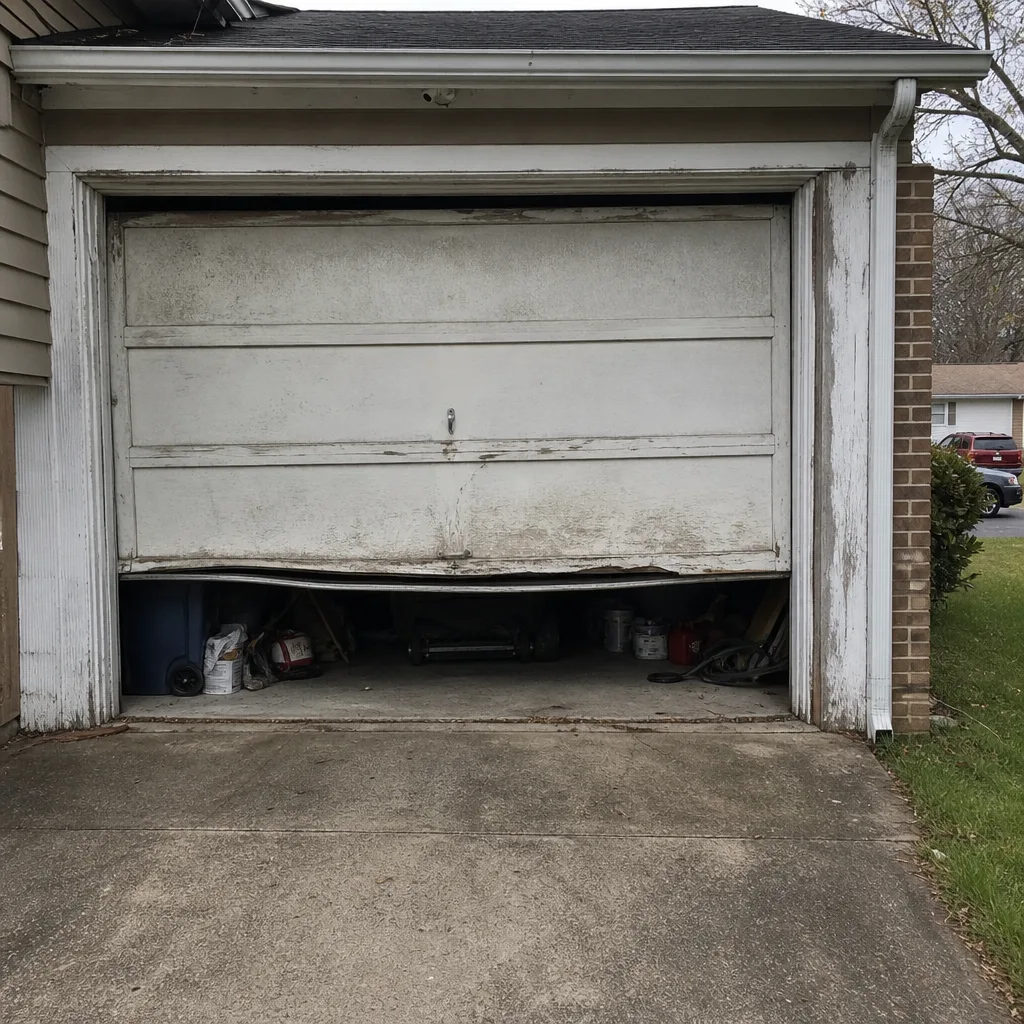 Before
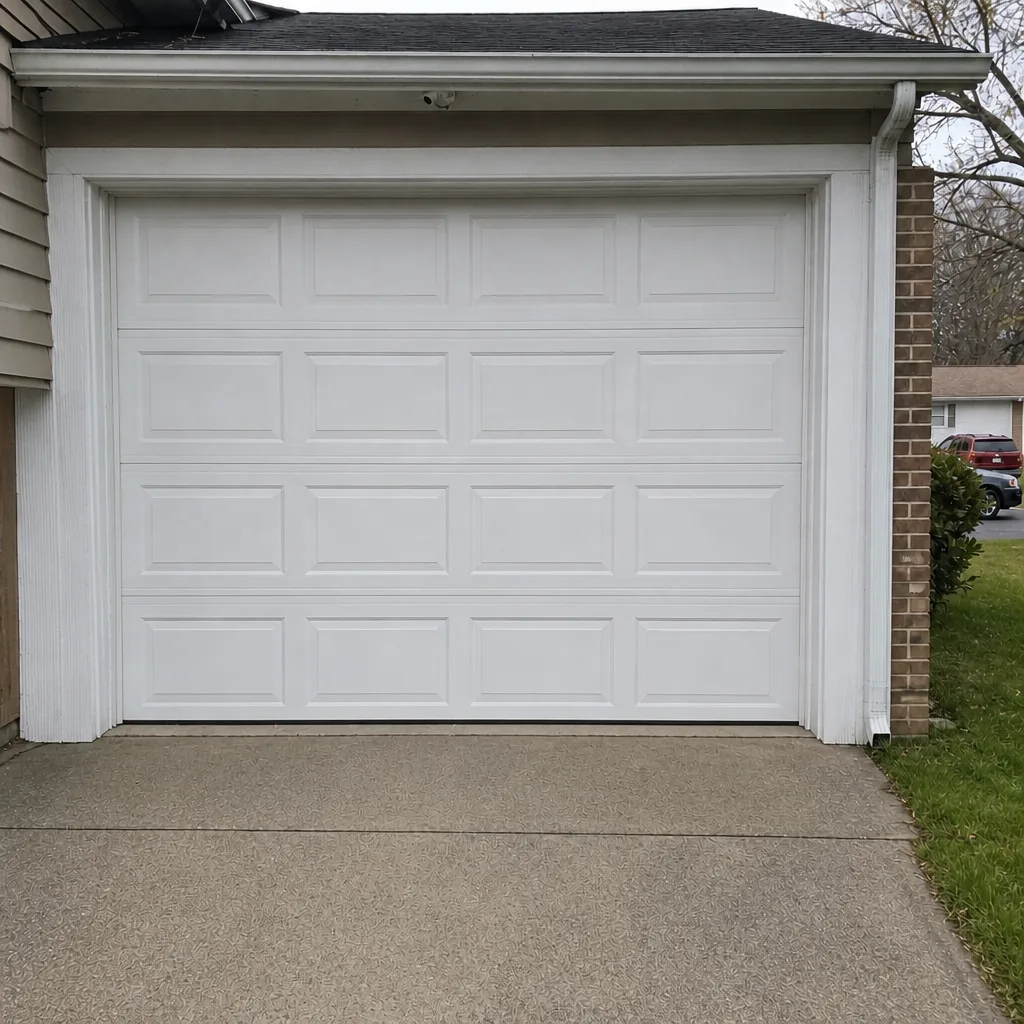 After
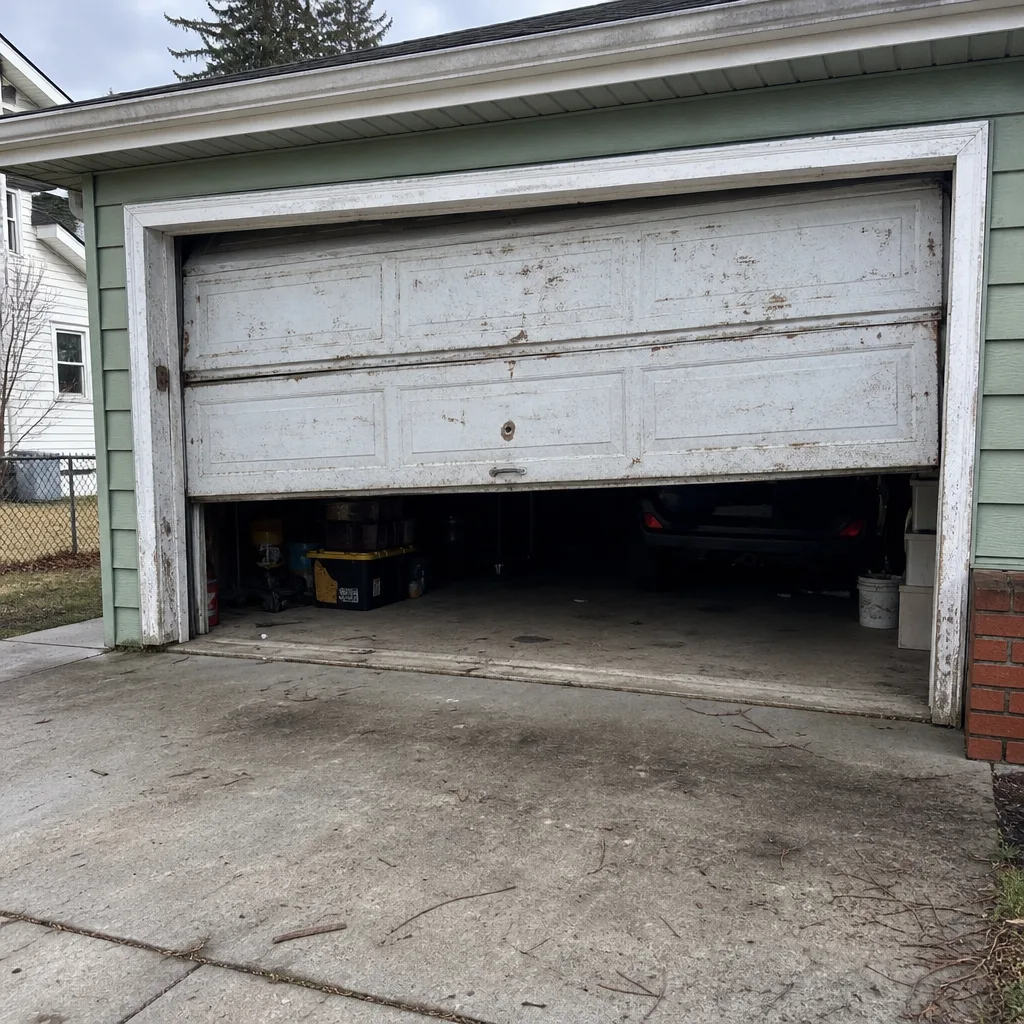 Before
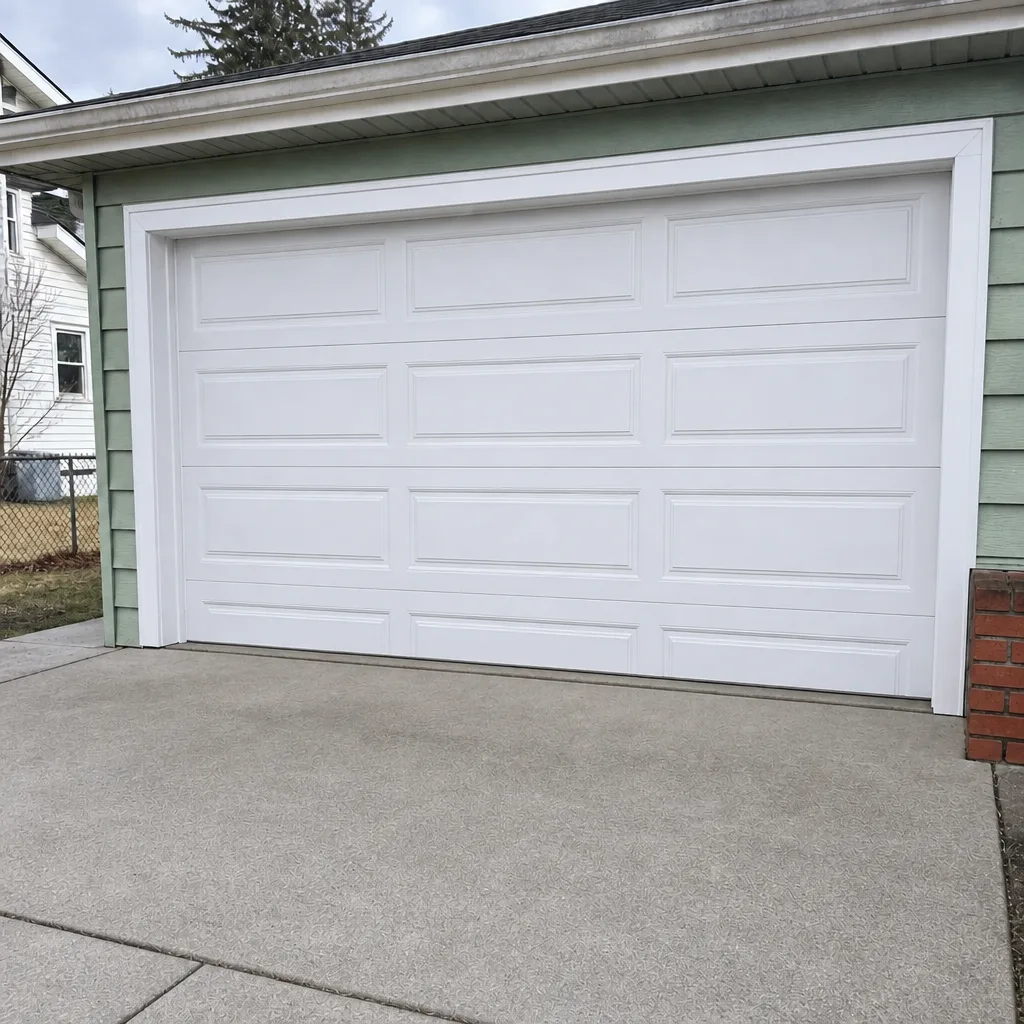 After
When to Call a Professional
Call a professional the moment you see a frayed cable, hear a pop from the springs, or feel that the door has become heavy to lift by hand. Those are injury risks, not inconvenience. Call within a day or two if the door hangs crooked, clunks on every cycle, has an uneven gap at the floor, or fails the 60-second balance test. Call on your own schedule if you hear a new squeal, see rust streaks on the tracks, or notice a stiff bottom seal. If the opener is stalling, reversing, or showing a light or beep code, that’s a diagnostic call, not a guess. And if you’re planning a new door, that’s a great time to talk through which brands fit the way you use your garage. Whitman Garage Door Repair offers free estimates in Newport News. Call (888) 967-0166. We answer 24/7. Fast dispatch from 7am to 7pm, Sunday through Friday.
Frequently Asked Questions
The first sign is usually a change in sound: a new squeal, grind, or clunk that wasn’t there a few months ago. That sound tells you a bearing, roller, or hinge is wearing, and it’s a step ahead of visible failure. If the sound appears alongside a slower open or close, treat it as a signal to schedule a check before the door stops moving.
No. Once a spring breaks, the door is unbalanced and much heavier than the opener is designed to lift. Running the opener on a broken spring usually damages the opener and can bend panels. If you suspect a spring is broken, stop using the door and call a professional.
Repair costs vary widely with the part and how much damage has built up, so we quote each job on its own after a free estimate. We can tell you the price is agreed in writing before any work starts, and the written estimate is the price. Call (888) 967-0166 for an exact quote on your door. Estimates are free.
Clunking usually means a loose hinge, a worn roller, or a door that’s drifted out of balance, and it’s worth having checked within days. Left alone, clunking puts uneven load on the opener and shortens its life. It’s a Tier 2 sign in our list above.
Blinking lights on an opener head are the unit reporting a fault, and each brand uses a different blink pattern. On a LiftMaster, Chamberlain, or Genie, we can usually read the pattern and confirm the fault in a single visit. Don’t guess at the code; call and we’ll diagnose it.
Yes, and it takes five minutes. Humidity here works on the hinges and tracks every month of the year, and the seasonal temperature swings work on the springs. A quick look and a listen once a month catches more than an annual tune-up does.
Disconnect the opener, lift the door to waist height by hand, and let go. A balanced door stays put. A door that sinks means the springs are weak, and a door that rises means they’re over-tensioned. Either way, have a professional reset the balance rather than adjusting it yourself.
Most opener problems we see are repairable, and the decision depends on the brand, age, and whether the issue is isolated to one component. For Newport News homes with a working LiftMaster or Chamberlain head unit that’s only showing one symptom, repair is often better than replacing. We look at the diagnosis first and recommend based on that.
The Bottom Line
Your garage door isn’t a silent machine, and it isn’t a mystery. The sounds, the visual unevenness, and the sixty-second balance test tell you almost everything you need to know about what’s wearing and what’s about to fail. The signs are almost always gradual, and the repair is almost always cheaper when you catch them in Tier 1 or Tier 2 than when the door finally jams in Tier 3. Watch for new noises, walk around the door once a month, take five minutes to run the balance test, and call the moment a cable or spring looks wrong. Twelve years in this trade has taught us that reading the door is the whole job, and now you can read it too.
If your door is showing any of the signs in this guide, we can help. Call (888) 967-0166 for a free estimate. We answer 24/7. Fast dispatch from 7am to 7pm, Sunday through Friday. Same-day repair is often available for urgent problems, and new door installations get a free measure and a written price before anything is ordered.
Written by the team at Whitman Garage Door Repair, serving Newport News since 2014.